Dr. Kushal Kumar Khiroria
13.05.2026
5 minutes
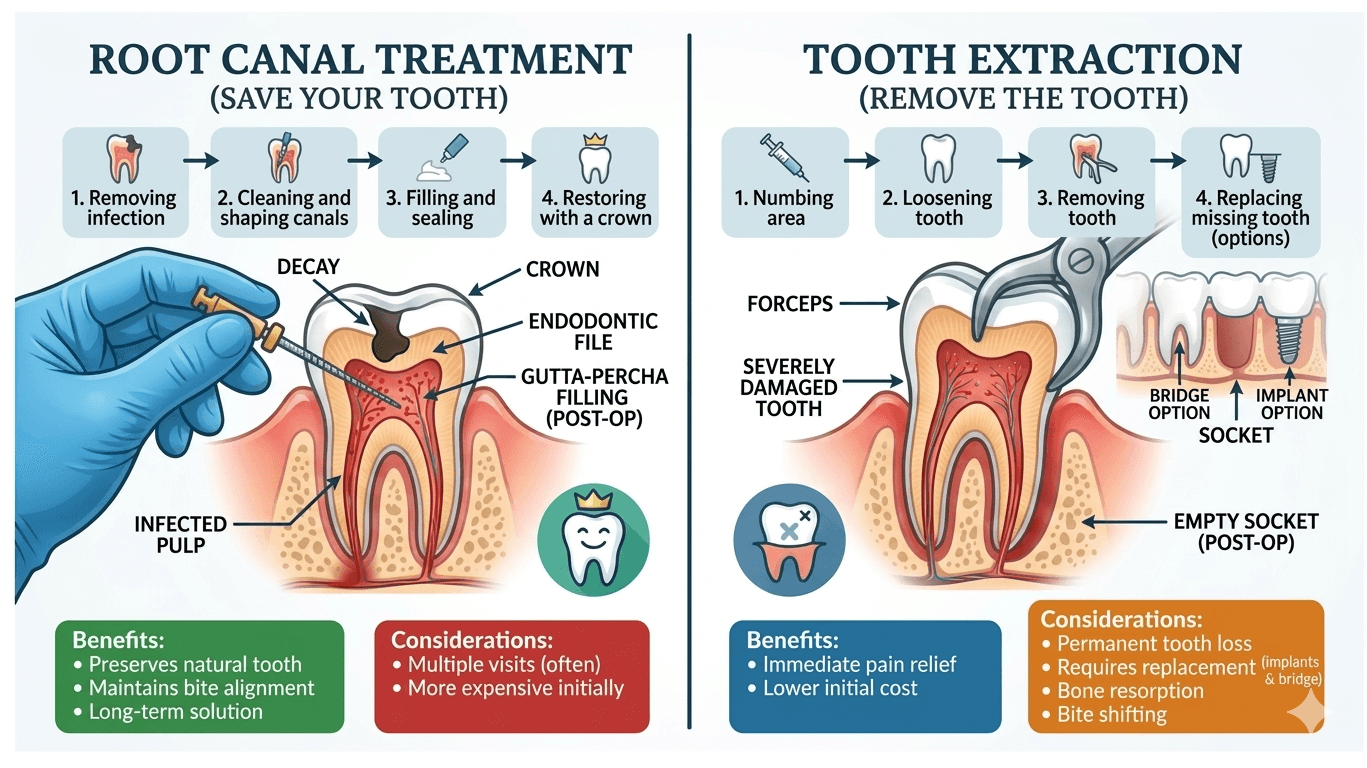
When you’re facing a severely damaged or infected tooth, the decision often comes down to two paths: Root Canal Therapy (RCT) or Tooth Extraction. It’s a common dilemma between the preservation of your natural tooth or an extraction of your natural tooth followed by a replacement. While both procedures are routine, the choice can impact your oral health, budget, and lifestyle for years to come. So the decision should be based on every aspect of thinking possible. So here we will try to understand the basic concept regarding both procedures.
1. Root Canal Therapy: The Case for Preservation
A root canal is often the "gold standard" for saving a natural tooth. The procedure involves removing the infected pulp, disinfecting the internal canals, and sealing them to prevent further infection.
The Pros
Keeps Your Natural Smile:
Nothing mimics the function of a natural tooth perfectly. Preserving your tooth maintains the periodontal ligament, which provides sensory feedback (proprioception) when you chew.
Prevents Bone Loss:
When a tooth is removed, the surrounding jawbone can begin to recede. Keeping the root intact helps maintain the surrounding bone’s structural integrity.
High Success Rates:
Modern endodontics, now utilizing AI-driven 3D imaging (CBCT) and dynamic navigation, has pushed success rates to nearly 93% for long-term survival.
The Cons
Future Brittleness:
Once the pulp is removed, the tooth is no longer "alive" and can become more brittle over time, often requiring a crown for protection.
Complex Anatomy:
Some teeth have intricate canal structures that can be difficult to clean perfectly, leading to a missed canal or a missed area of infection remaining inside the tooth which may lead to reinfection in rare cases.
2. Extraction: When is it Time to Let Go?
Extraction involves the total removal of the tooth. While it solves the immediate pain of an infection, it is rarely the end of the journey, as most dentists recommend a dental implant or bridge as a permanent replacement of the lost tooth.
The Pros
Definitive Solution:
If a tooth is fractured below the gum-line or has severe bone loss, extraction may be the only predictable way to eliminate infection.
New Technologies:
If replaced with a dental implant, you get a solution with a 97% success rate over 10 years that cannot develop cavities.
The Cons
The "Edentulism" Domino Effect:
Losing a tooth isn't just about the gap. It can lead to shifting teeth, difficulty chewing, and in older adults, has even been linked to higher risks of malnutrition and cognitive decline.
Longer Timeline:
If you choose an extraction followed by an implant, the total process can take 3 to 6 months to allow for bone healing, whereas a root canal and crown are usually finished in two weeks.
3. The Cost Factor
Cost is a major driver in dental decisions, but it is often misunderstood.
Upfront:
An extraction is significantly cheaper than a root canal.
Long-term:
When you add the cost of a dental implant and crown (the necessary replacement for an extraction), the total often exceeds the price of a root canal and a protective crown.
In many cases, saving the tooth you have is the most cost-effective long-term investment.
Which is right for you?
The decision ultimately depends on the structural integrity of your tooth. Root Canal Therapy is the preferred choice to maintain your natural biomechanics however, if the damage is too extensive, an extraction followed by an implant is a highly successful and durable alternative.
Having a pain in the tooth? If you think a root canal or extraction might be required, book an appointment at Kreative Dental Clinic, and we would take care of it. We are located at 99/2, Canal Street, Sreebhumi, Lake Town, Kolkata, West Bengal 700048.
Call: 6291 913 289
Last updated on May 2026.
© Kreative Dental Clinic. All rights reserved.