Written by Dr. Kushal Kumar Khiroria
14 April 2026
3 mins read
You may have heard many people saying:
“Don’t get scaling done too often. It will make your teeth weak.”
This is one of the most common myths about dental treatment. Many people avoid professional cleaning because they worry that scaling will damage the enamel, create gaps between teeth, or make their teeth loose.
The truth is exactly the opposite. Teeth scaling does not damage healthy teeth when it is performed by a qualified dentist. In fact, it protects your teeth and gums from long-term damage.
What Is Teeth Scaling?
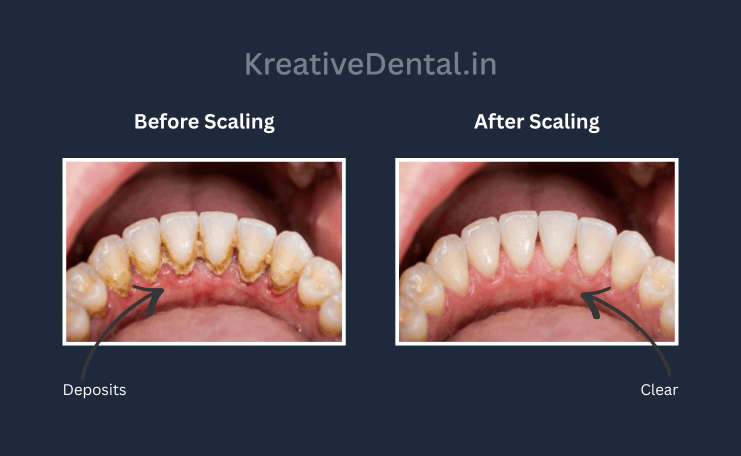
Teeth scaling is a professional cleaning procedure used to remove:
•Plaque
• Tartar (calculus or yellow colored deposits)
• Stains around the teeth and gums
Even if you brush twice a day, some plaque can harden into tartar over time. Once tartar forms, it cannot be removed with a toothbrush at home. A dentist uses special instruments or ultrasonic scalers to gently remove these deposits.
Why Do People Think Scaling Makes Teeth Weak?
After scaling, some patients notice:-
1. Sensitivity After Scaling
Calculus or yellow deposits are deposited over tooth surface (teeth ke upar). So when we remove the deposit from the tooth surface, it exposes some small tubules on the tooth which causes sensation. But this sensation subsides in some hours or days.
The scaling did not create the problem — it simply revealed an issue that was already there. Also removal of the deposit will help the gums to become healthy.
2. Gaps Between Teeth
Sometimes the calculus builds up between the teeth for years and create space between the teeth and also damages the bone and gum region around the tooth. After it is removed, patients may suddenly notice spaces between their teeth. Those gaps were already present. The calculus was simply filling them in.
Removing tartar allows the gums to heal and return to their natural shape and sometimes also fill the space created by the deposit.
3. Teeth Feel Loose
In cases of gum disease, calculus may hold loose teeth together as the deposits damages the bone around the tooth and takes its space. So once the tartar is removed, the mobility becomes more noticeable. Again, the teeth were already loose because of gum disease — not because of scaling. Moreover, scaling or removing the calculus will help the body in forming new tissues around the teeth.
Does Scaling Damage Enamel?
No. Tooth enamel is the hardest substance in the human body. The instruments used for scaling are designed to remove calculus and plaque, not healthy tooth structure. When performed properly by a dentist, scaling does not scrape away enamel or weaken your teeth. The instrument we dentist use works on a vibratory motion and as we work on hard structure 2 like enamel, there are chances of some microroughness on the tooth surface but it goes automatically after polishing or normal brushing.
So we should go for scaling at least once a year as the food habits are gradually detoriating due to refined food and materials. Some patients may even need scaling twice a year i.e., every 6 months as some people have tendency of more deposits due to multiple reasons like saliva, tongue, brushing techniques, any habits etc.
Last updated on May 2026.
© Kreative Dental Clinic. All rights reserved.